
While Covid-19 and Allergic Rhinitis share respiratory symptoms, key differences set them apart.Covid is often accompanied by fever, fatigue and loss of taste or smell, which are generally not the symptoms of AR.
Respiratory distress is more severe in Covid, contrasting with milder symptoms like sneezing and nasal congestion in AR. Covid is contagious and is caused by a virus, whereas AR stems from allergic reactions to pollen or irritants. Doctors shared these differences at an awareness event conducted by the Indian Medical Association (IMA) recently.
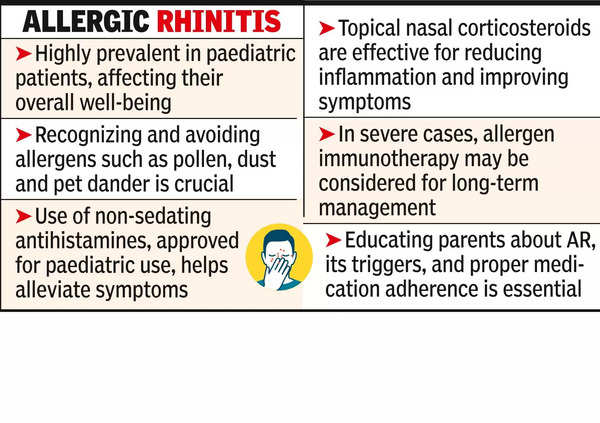
IMA Nagpur president Dr Vandana Kate emphasized on the importance of awareness. “Allergic Rhinitis is most prevalent in pediatric and adolescent patients. It can affect different patients in different ways. It impacts the development of children and adolescents in many ways, resulting in poor performance in school and sports. While treating these patients counseling of their parents is equally important,” Dr Kate said.
Pediatric intensivist and allergy specialist Dr Anupam Bahe spoke on ‘Allergic Rhinitis in Kids: Myths, Facts and Treatment.’
“AR primarily targets the upper airways, causing nasal congestion and sneezing. In contrast, Covid involves lower respiratory tract symptoms, such as cough, shortness of breath, and chest pain, indicating potential lung involvement,” said Dr Bahe adding that AR rarely progresses to lung complications, focusing on upper airway irritation.
The key difference lies in the severity and nature of lung impact. Covid may lead to severe pneumonia and acute respiratory distress syndrome (ARDS), demanding critical medical attention. AR typically spares the lower respiratory tract, underscoring the importance of distinguishing these conditions for accurate diagnosis and appropriate management.
Veteran pulmonologist Dr Rajesh Swarnakar highlighted the escalating incidence of allergic rhinitis and asthma globally, emphasizing on the importance of precise therapy for effective management.
ENT surgeon Dr Gauri Kapre Vaidya delved into the intricate relationship between stress and allergy. “Chronic rhinosinusitis is not merely an infective condition. Stress plays a direct role in exacerbating allergic responses. Nasal douching, specifically Jal Neti, has shown a positive role in managing rhinosinusitis,” she said.
We also published the following articles recently
In December, two cases of foreign objects being stuck in the respiratory tract were handled by experts at Civil Hospital in Ahmedabad. In the first case, a 10-month-old boy from Himmatnagar ingested a soybean, causing critical condition and breathing difficulties. Emergency bronchoscopy was performed by doctors to remove the bean from the left lung. In the other case, a two-year-old boy underwent surgery after swallowing a pin. According to Dr. Rakesh Joshi, medical superintendent of Civil Hospital, there have been a total of 51 recorded instances in the past two years of children ingesting objects such as coins, pins, battery cells, LED bulbs, etc, at the hospital.
The jump in pollution levels and winter smog have led to a spike in respiratory issues among people, say doctors. Patients are walking in with complaints of Chronic Obstructive Pulmonary Disease, SARS CoV2, and bronchial asthma. Children are particularly vulnerable to the harmful effects of air pollution, which can disrupt their lung growth and increase the risk of infections, asthma, and poor lung development. PM2.5 can significantly increase the risk of lung cancer even among non-smokers. Pollutants lingering in the atmosphere during winter pose a heightened risk of lung issues and bronchial asthma.




