
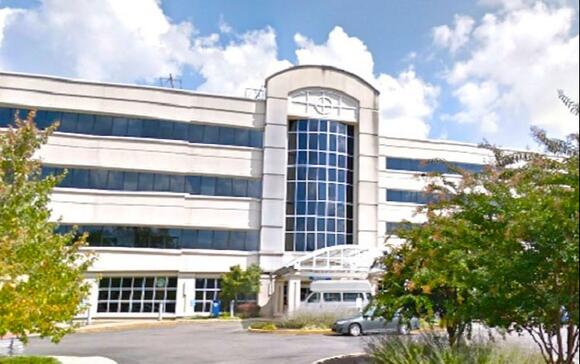
WVU Thomas Hospital in South Charleston became the first hospital in the Kanawha Valley to offer the Zephyr Valve treatment for COPD.Photo byWVU Thomas Hospitals
SOUTH CHARLESTON -- Larry Ray suffered from chronic obstructive pulmonary disease, or COPD, for years.
COPD, a chronic inflammatory condition, causes obstructed airflow from the lungs, according to the Mayo Clinic. Ray and many other COPD patients suffer from breathing difficulty, often accompanied by a cough, mucus production and wheezing.
The American Lung Association notes that COPD can be treated with numerous noninvasive therapies, including medications, supplemental oxygen and noninvasive ventilation. But often the only effective treatment for chronic cases is surgery.
"Some people with very severe COPD symptoms may have a hard time breathing all of the time," information on the ALA website reads. "In some of these cases, healthcare providers may suggest lung surgery to improve breathing."
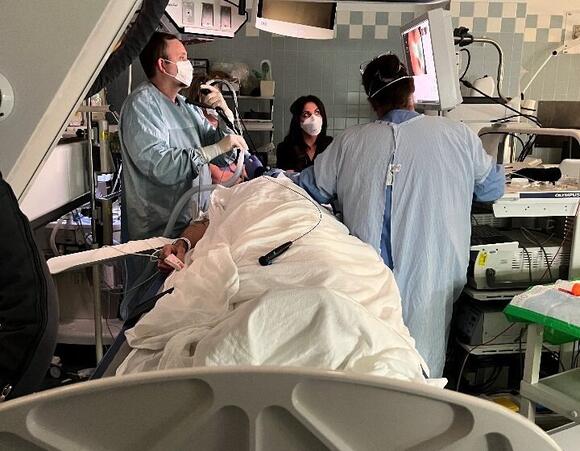
Thomas Hospital representatives say the Zephyr Valve procedure, shown above, is a less invasive, "better alternative" COPD treatment.Photo byWVU Thomas Hospitals
While several surgical procedures including bullectomy, lung volume reduction surgery and lung transplant are used to treat chronic cases of COPD, these options are invasive and often come with risk, doctors note.
Now, thanks to a new Zephyr Valve procedure offered at Thomas Hospital in South Charleston, patients with severe COPD and emphysema finally have a treatment option that doesn't require major surgery.
"I immediately felt better," Ray said after recieving the treatment. "My wife commented that she hadn’t seen that much color in my face in years."
Ray was among the first patients in the Kanawha Valley to be treated with the Zephyr Valve, an FDA-approved device that received the breakthrough designation in 2018, at Thomas Hospital.
As part of treatment, a physician places one or more small valves in a patient’s airway. The valves help release trapped pockets of air, allowing the patient to breathe easier.
"This minimally invasive treatment [the Zephyr Valve] is a better alternative than traditional lung volume reduction surgery as it doesn’t require any incisions on the patient," a press release from WVU Thomas Hospitals notes.
One study published in the Journal of Respiratory and Critical Care Medicine (JRCCM) found nearly half of the participants who received the Zephyr valves had a 15 percent or greater increase in lung function. Researchers noted that the device "provides clinically meaningful benefits in lung function, exercise tolerance, dyspnea [labored breathing], and quality of life."
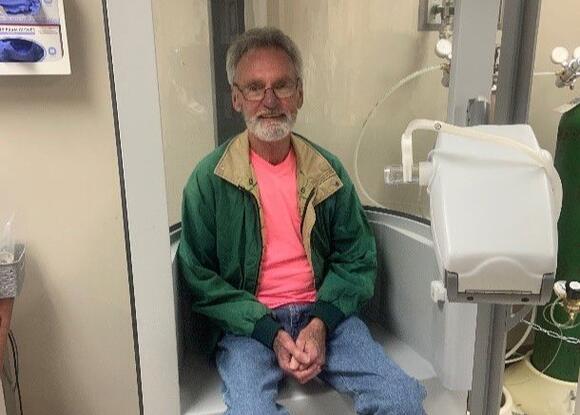
Larry Ray was one of the first local patients to receive a valve. "I would recommend this procedure to anyone suffering with COPD," he said.Photo byWVU Thomas Hospitals
Still, as with any medical procedure, there are risks. Device literature notes some patients may experience collapsed lung, chest pain, pain in the throat and even coughing up blood, among other adverse effects. But the JRCCM study notes that adverse events that affect breathing were comparable between people who received the valves and people who didn’t.
Dr. Phillip Cox, a Kanawha Valley pulmonologist, performed the first Zephyr Valve treatments at Thomas Hospital. He said he is "thrilled" to bring the new treatment option to the area.
"Many of our patients suffering with severe emphysema or COPD become very limited in the activities they can do because every breath they take is a struggle,” Cox said.
Fortunately, that's no longer the case for Ray.
"Just a few weeks after the procedure, I was pressure washing my deck, fixing my boat and going fishing," Ray said. "I couldn’t believe how much my life improved because I was able to breathe easier."




