
My wife, Susan, and I have traveled around the world by trains, planes, ships, and automobiles finding new adventures. We are now in Amsterdam — our first international trip since 2019.
When I was diagnosed with idiopathic pulmonary fibrosis (IPF) in January 2017, my care team encouraged me to live my best life. I did, including by traveling to places Susan and I wanted to ensure we could visit together.
When COVID-19 hit, my care team advised against unnecessary travel. Plus, my IPF had begun to progress more quickly. I was approved for a lung transplant in March 2020 but deferred, due to the pandemic. It was a year later, almost to the day, when I was listed. I received my bilateral lung transplant in July 2021, which restricted my travel for another year.

Preparation
We have traveled to all seven continents, taken an untold number of cruises, and consider ourselves to be seasoned travelers. I typically get excited before a new adventure, especially when it involves international travel. Yet preparing for this trip as a post-transplant patient was a completely different experience.
I arranged to see my kidney care team, my cardiac surgeon, and my transplant care team during the first half of March. All of them gave me guidance on things to be aware of while traveling abroad.
Because I am immunosuppressed to reduce the risk of my body rejecting my transplanted lungs, I am more susceptible to illness. Even though I’m vaccinated against the flu, COVID-19, and respiratory syncytial virus, I will be masked during our flight and when we are among crowds.
Due to swelling in my lower legs, I will not spend the seven-hour flight sitting. I will walk up and down the aisle and otherwise keep my legs elevated for as much time as possible. Anticipating the need for elevation, we opted to splurge on business class seats, which will allow us to lie flat during the flight.
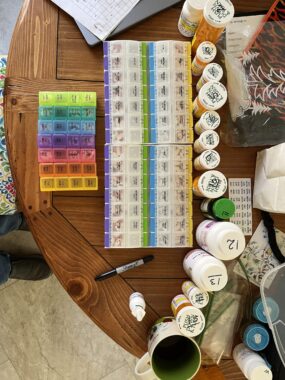
Packing for vacation post-transplant requires some level of concentration. (Photo by Sam Kirton)
The most challenging aspect of packing for this trip was not deciding what to wear, but thinking through all of my medication requirements.
My care team’s guidance was clear: Prepare for the unexpected. Pack twice the amount of medication you think you’ll need.
I did just that, preparing a 20-day supply of my medications for our seven-night cruise.
Additionally, I asked my care team to prepare a letter listing all of my medications. During a cruise around Australia and New Zealand, local authorities met with all passengers carrying prescription medication during the ship’s immigration processing. The trip documentation suggested that some countries require prescriptions to be carried in their original containers.
When we left our home in Virginia to embark on the trip to Amsterdam, we double-checked that we had all the necessary medications. I also had a plan to adjust my medication schedule to accommodate the time zone change.
Why Amsterdam?
My IPF journey has affected our ability to travel, especially internationally, which we both love to do. Susan sacrificed so much when she assumed the role of caregiver. Some years ago, she talked about wanting to see the tulips bloom in Amsterdam. This trip will allow her to realize that dream.
We are aboard the AmaLucia, sailing out of Amsterdam for a seven-night “Tulip Time” river cruise. The ship carries 156 passengers, so it’s not like the larger ones we’re accustomed to. Two days before we flew to Amsterdam, we received photos of the tulip fields we will be visiting in full bloom.
Next week, I will share more with you about navigating a river cruise as a post-transplant IPF patient. I started taking notes on the day we left so I can report back to you about this vacation. I want you to ask questions; feel free to post them in the comments. Sharing my experience is how I can continue to make every breath count.
Note: Pulmonary Fibrosis News is strictly a news and information website about the disease. It does not provide medical advice, diagnosis, or treatment. This content is not intended to be a substitute for professional medical advice, diagnosis, or treatment. Always seek the advice of your physician or other qualified health provider with any questions you may have regarding a medical condition. Never disregard professional medical advice or delay in seeking it because of something you have read on this website. The opinions expressed in this column are not those of Pulmonary Fibrosis News or its parent company, BioNews, and are intended to spark discussion about issues pertaining to pulmonary fibrosis.




