Let’s face it: Sitting with perfect posture is hard work.
We’re talking about keeping your spine straight, your vertebrae and pelvis stacked on top of each other… keeping your abs slightly tight and rolling your shoulders back and down, away from your ears. There’s a lot to think about.Since it is reserved perfect sitting posture It requires considerable muscular endurance and mental space, and is a challenge to maintain for even 10-15 minutes, let alone eight hours.
As the workday progresses, we adopt slouched postures, which can overload certain muscles and put the health of our shoulders, hips, and back at risk. After a long day at work, you may feel nervous, sore, or even dizzy.In fact, some studies show Sitting for long periods of time reduces blood flow Affects the brain and reduces mental productivity. Additionally, doctors have found that a sedentary lifestyle increases the risk of high blood pressure, high blood sugar, and obesity.
The reality is that sometimes we can’t avoid sitting for hours at a time. So the key, according to certified personal trainer Anna Claire Loper, is to incorporate exercises to counteract the negative effects of sitting for long periods of time.
“I can’t convince my clients to stop sitting,” he said. “But I can teach them the importance of breathing and strength training that targets underactive and weak muscles: lats, core, glutes and hamstrings.”
“Everyone should develop a healthy habit of developing an exercise program in the workplace,” adds Dominique Finkley, EXOS performance expert and certified trainer. “This has been shown to increase energy, mental efficiency, memory and creativity while reducing stress and anxiety levels.”
If you’re not sure how to create your own desk routine, don’t worry. We asked Loper and Finkley what they thought were the most effective exercises you can do throughout the day. After an hour of sitting, challenge yourself to take a movement break and try one of these exercises.
Table of Contents
Mobile work
diaphragmatic breathing

Suitable: Relieve muscle tension and relax the nervous system.
How to do it: Place one hand on your chest and the other under your ribcage to feel the movement of your diaphragm as you breathe. Notice how it expands when you breathe in for four seconds. Hold for one second and exhale for four seconds. Repeat five times while controlling your body. Notice where you hold tension. “For example, can you separate the shoulders from the ears?” Loper asked.
Sectioned Cat Cow
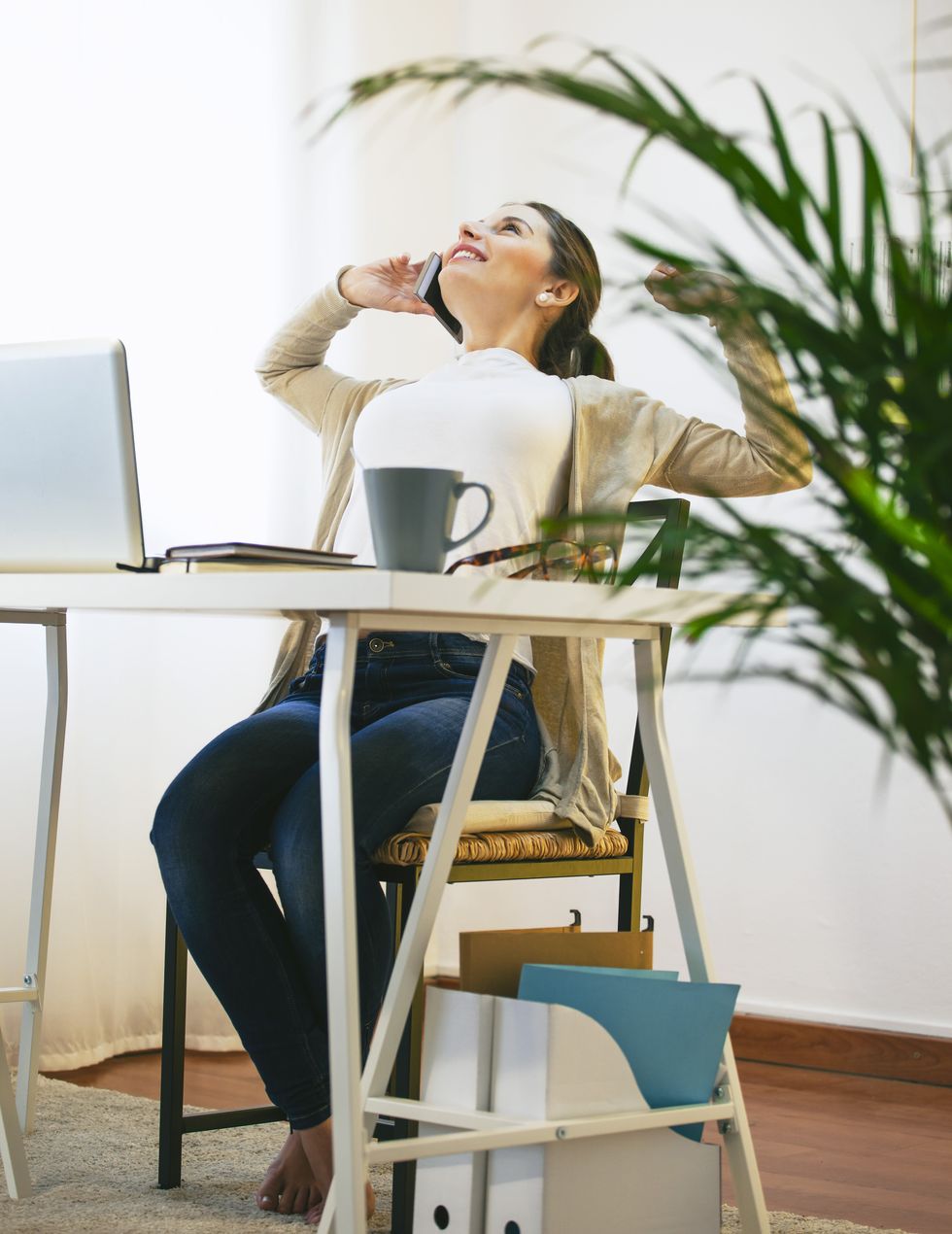
Suitable: Upper and lower back mobility.
How to do it: While sitting, let your stomach tilt forward while extending the vertebrae in your lower back, vertebrae by vertebrae, slowly forming a curve in your spine. Lift your chest, then bend your neck back while looking at the ceiling. Next step: the opposite. “Put your chin in first,” Finkley said. “Next, begin to round your upper, middle, and lower back, and finally tighten your glutes.” Repeat two or three times.
Divided into four stretches
Suitable: Mobility in hips, glutes, and lower back.
How to do it: Sit in a chair and cross your right ankle over your left thigh. Sit up straight and inhale. As you exhale, bring your navel closer to the seat. “Stretch as deep as you can, keeping your spine long,” says Loper. Hold the stretch for 30 seconds to two minutes, then switch legs.
Sitting thoracic spine rotation
Suitable: Neck pain and easier breathing.
How to do it: Start by leaning slightly forward in your chair. Hold your hands tightly in front of your chest. Inspire. Exhale slowly as you rotate your neck and spine to the right. “When you can’t turn anymore, hold this position for a second,” says Finkley. “Then, while leading with your left ear, slowly turn your head toward the opposite shoulder.” Bring everything back to center and repeat on the other side. Do this two to three times on each side.
Sitting heart opener
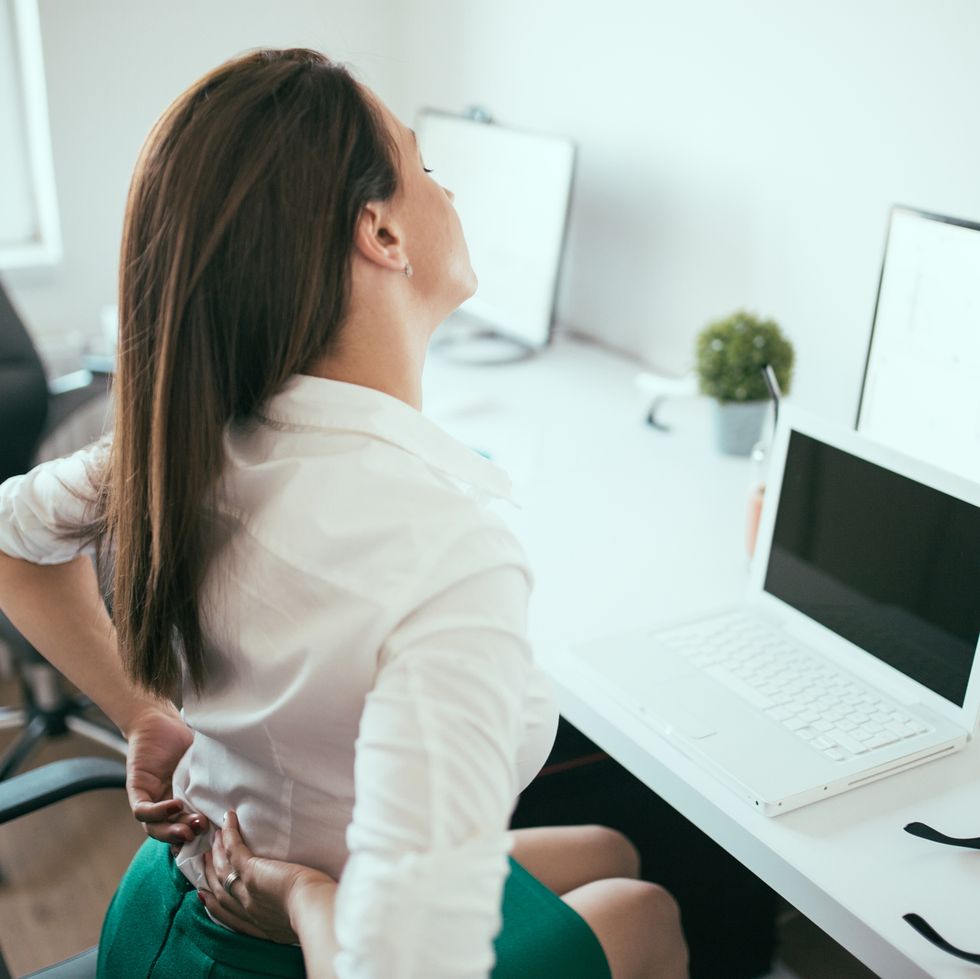
Suitable: Chest, upper back, and shoulder mobility
How to do it: If you are seated, hold the base of the chair by the backrest. If you are standing and your range of motion allows, interlace your fingers behind you, near the base of your spine. Lift your chest toward the ceiling while pulling your shoulders back and down. “Breathe into your chest and belly for three to five deep breaths in this position,” says Loper.
Standing QL (deep abdominal muscle) stretch
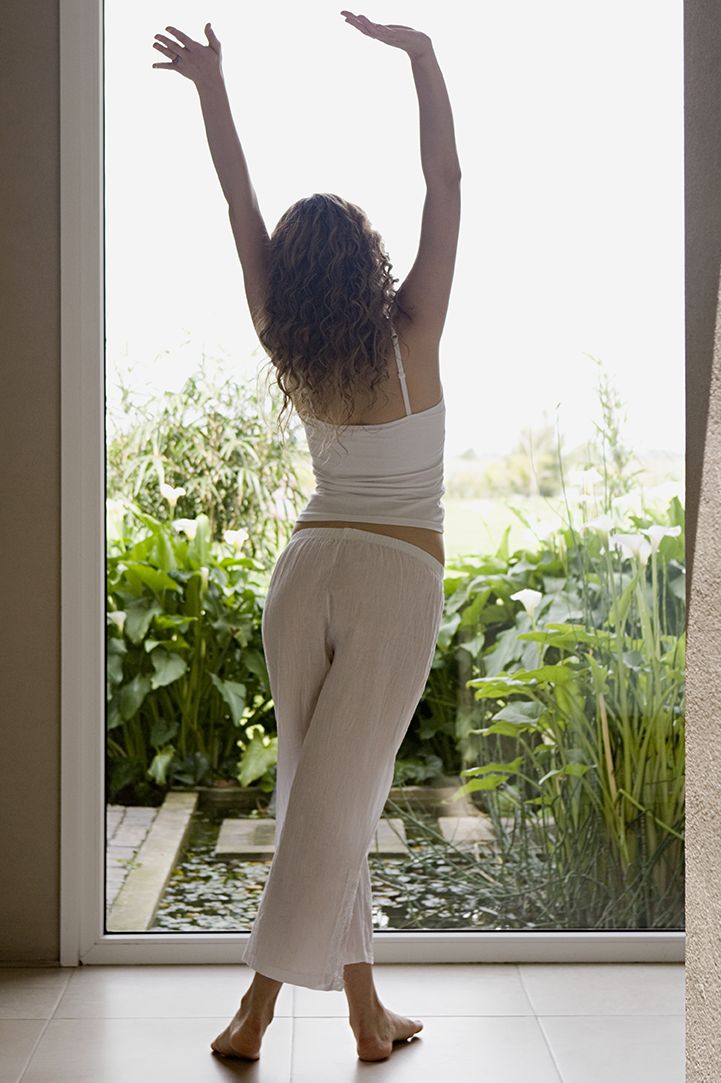
Suitable: lumbar range of motion.
How to do it: Stand in the middle of the door frame and first cross your left leg over your right leg. Lift your left arm to grip the door frame while opening your left hip. “Exhale to increase the stretch and hold for 15 to 20 seconds,” says Finkley. Make sure to repeat on the other side.
restless
Suitable: mobility of the entire body.
How to do it: While it may seem silly, this exercise will help you become more aware of when you sit in certain positions for too long. Sit in a chair and “shift your weight from side to side,” Loper says. “If you find yourself favoring your left hip, switch to your right hip. If you always cross your left leg over your right, switch it up. (Make circles with your neck, ankle, wrist, and move your toes.” As long as you If you want, you can do it and have fun.
Control wrist rotation
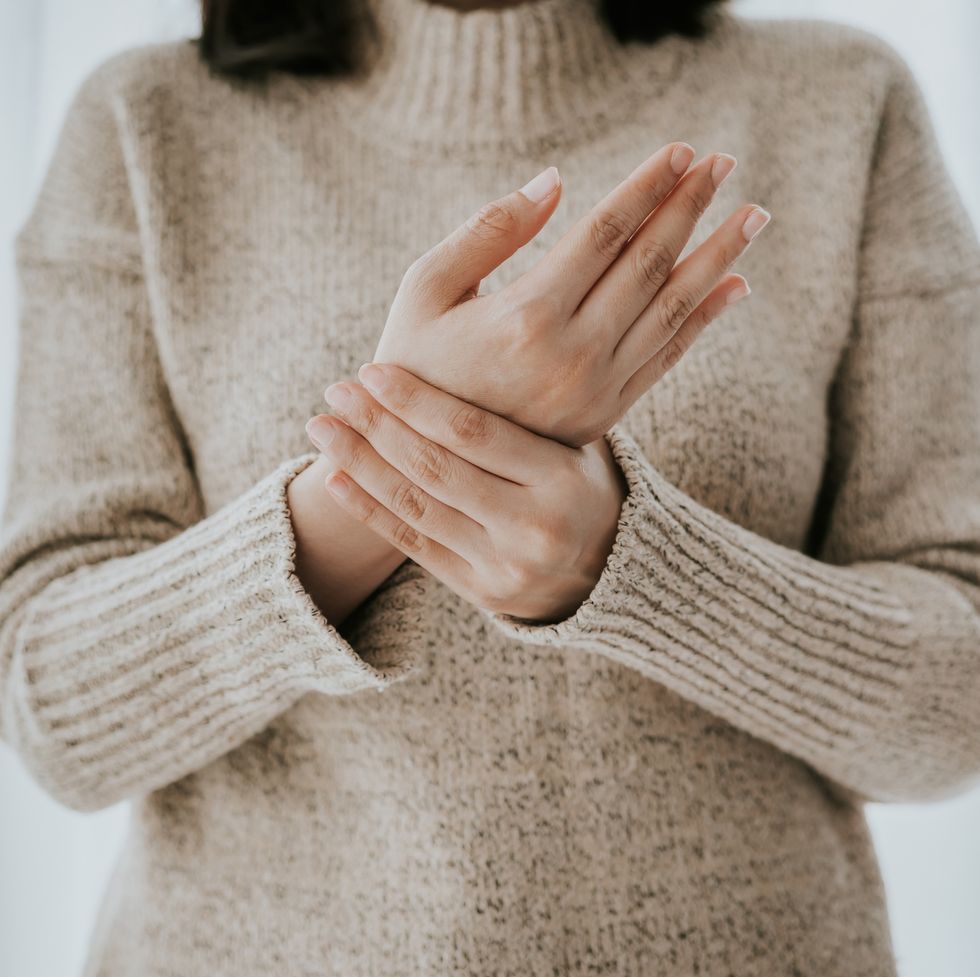
Suitable: Wrist and forearm mobility, carpal tunnel
How to do it: Start by holding your right forearm with your left hand. Make slow circles with your right wrist. Make four turns clockwise, then four turns counterclockwise. “There might be some itchy spots,” Finkley said. If so, go around them and keep moving. Repeat this on your left wrist.
Skechers OfferSkechers Flex Appeal 4.0 Sneakers
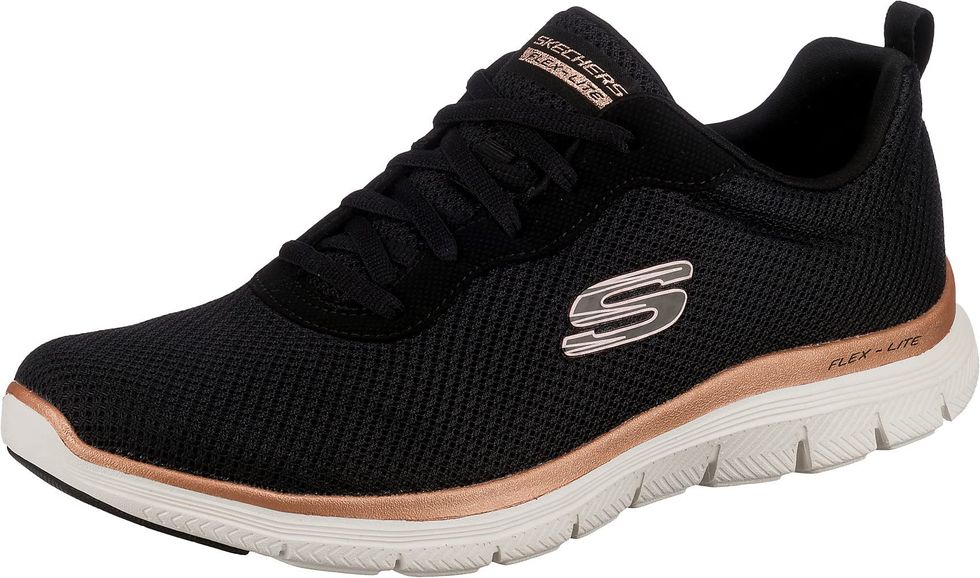
Skechers OfferSkechers Flex Appeal 4.0 Sneakers
Now 40% off
strength exercises
When you get back from a long day at work, you’ll want to build up the strength in your hips and glutes that you’ve neglected all day. According to Finkley, these are some of the best moves you can make to strengthen these areas. All you need are some resistance bands.
Activation of hip flexors in high plank
Suitable: Hip and trunk strength.
How to do it: Take an easy-tight strap and wrap it around the bottom of your foot. From there, extend your hands into a plank position with your arms straight. Make sure your wrists, elbows, and shoulders are fully stacked. Bend your right foot and bring your right knee close to your chest. Keep your back flat. Return to your right foot and repeat with that side, 15 times total. Then switch to the other side. Do two to three sets on each side.
one leg kidnapping
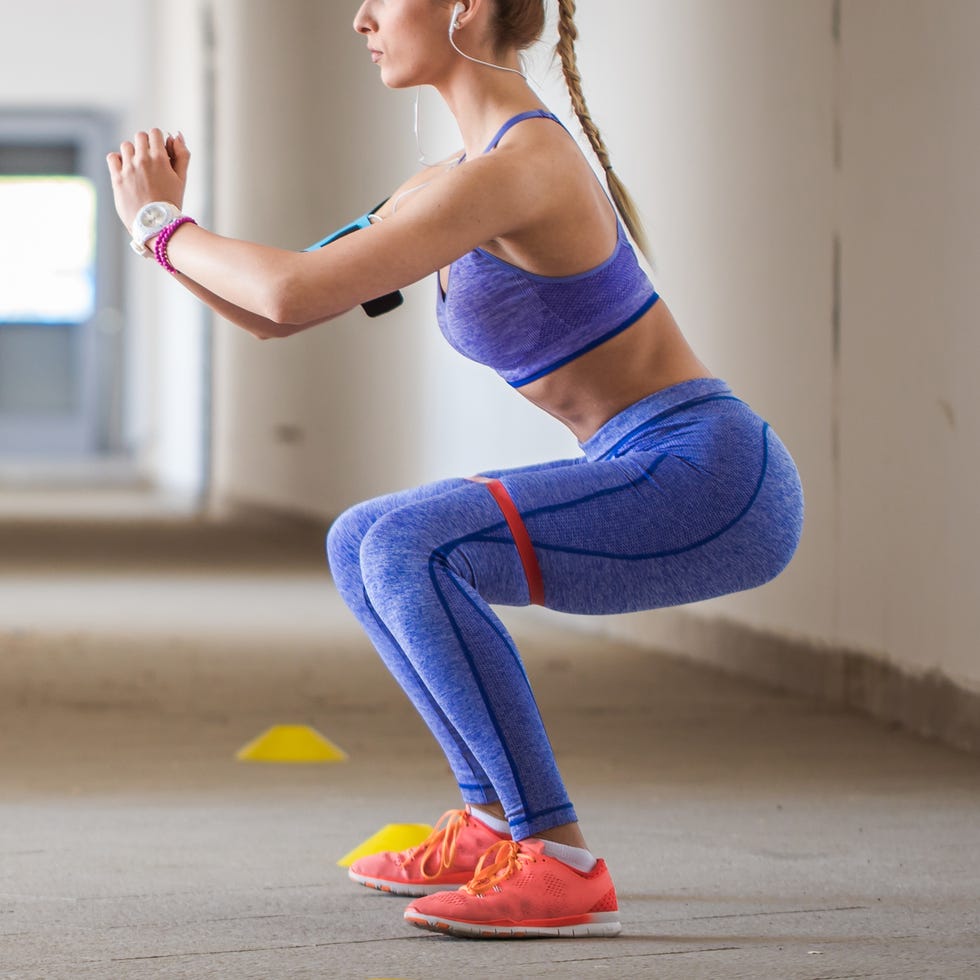
Suitable: Abductors, gluteal strength, balance
How to do it: Place a medium resistance band above your knees. Standing, pull your hips back as if you are squatting. Lean your chest slightly forward and bend your knees until your shoulders are in line with your toes. As you begin to stabilize yourself with your right leg, lift your left foot. Consider resting your toes on the soles of your shoes. Using your left leg, slowly move the band away from the midline and back to the neutral position. Repeat 15 times and switch legs. Do two to three sets on each side.
Squat
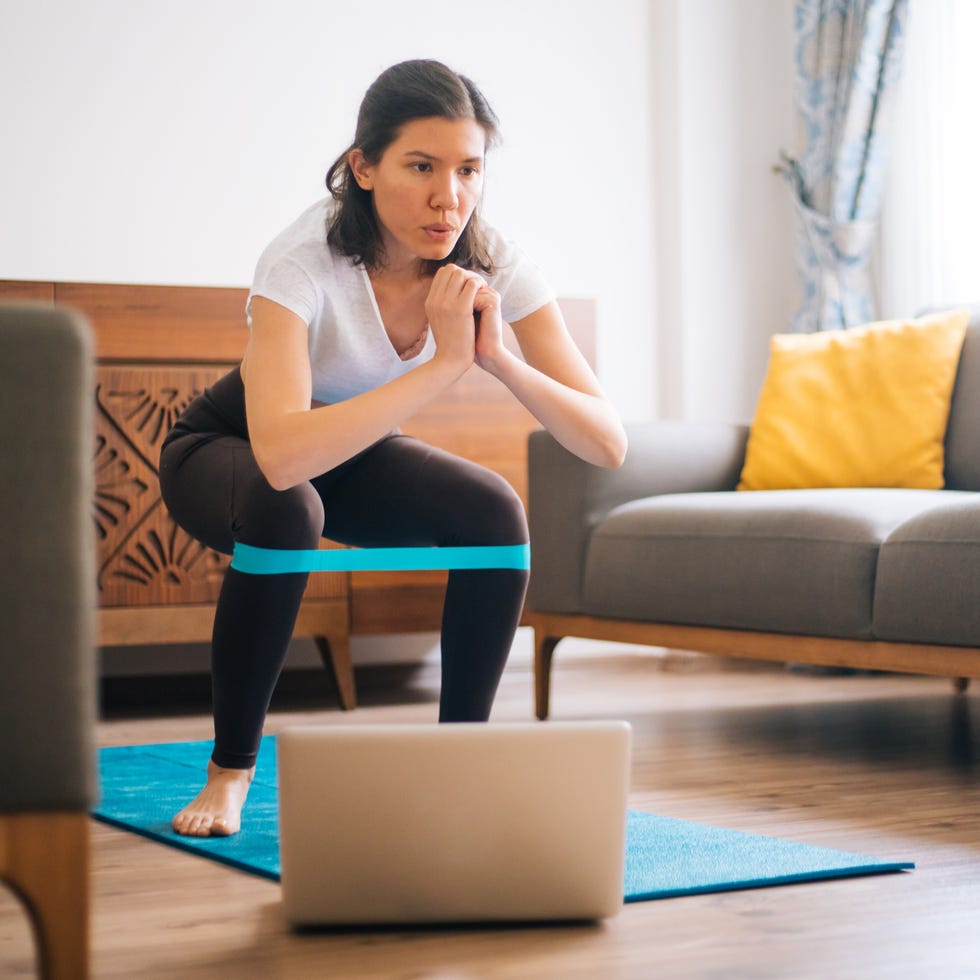
beneficial to: Quadriceps, gluteal and abductor strength.
How to do it: Place a heavy-duty resistance band under your knees. Start by standing with your feet together, then jump your legs outward while lowering your hips down and back. Keep your chest up. Return to the starting position and repeat for 2 to 3 sets of 15 times.
Adele Jackson-Gibson is a certified fitness trainer, model and author. She earned a master’s degree in journalism from New York University and a bachelor’s degree in literature from Yale University, and has since written for a variety of sports, fitness, beauty and cultural outlets.