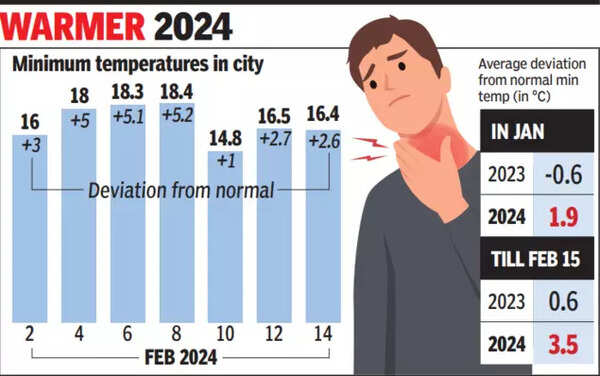
The minimum temperature of 20°C on Feb 5 was not only reminiscent of a March day, but also one of the highest minimum temperatures in three decades.While the lowest minimum temperature in the first half of Feb last year was 10.7°C, this year it stands at 14.4°C.
The double season effect has triggered, what the physicians call, an “upper respiratory tract infection epidemic”. The most common symptoms include prolonged throat pain and yellow sputum (phlegm).
Dr Maharshi Desai, internal medicine specialist at Apollo Hospitals, said a majority of the cases involve throat infection.
“We are seeing cases of Covid, H1N1, Influenza A and B and even sporadic malaria and dengue cases occasionally. Any respite can be expected after the temperatures rise to a certain level,” he said.
“The OPD cases these days are double the usual numbers. I believe prolonged throat inflammation is due to viral outbreak and increased pollution. It is caused by influenza virus, adenovirus, and respiratory syncytial virus (RSV). It is marked by symptoms that continue for 10 to 14 days,” said Dr Falguni Iyer, a physician with Shalby Hospitals.
“We suggest the use of masks to senior citizens and those with existing illnesses and low immunity.”
Dr Pragnesh Vachcharajani, secretary of the Federation of Family Physicians’ Associations of India, said that the illness often affects the entire family.
“We send those with severe coughing and throat infection for prolonged periods to pulmonologists. Some patients come in with breathing difficulties and inflammation of airways. We request citizens not to pop antibiotics without medical advice and stay away from homemade concoctions since they often result in throat blisters,” he said.
“This season, we are seeing cases of pharyngitis (inflammation of back of throat), sinusitis (inflammation of sinuses) and laryngitis (inflammation of voice box). Yellow phlegm is commonly reported, and the patients are often on medication for more than 10 days. However, fever is not associated with the infection. We recommend maintaining personal hygiene and hydration,” he said.
Symptoms such as red eyes and blockage of ears are also associated with viral infection.
We also published the following articles recently
Mumbai experienced a chilly morning with the lowest minimum temperature recorded for the month. The chill was caused by a northerly breeze. Day temperatures also saw a dip. Winter in Mumbai was not extreme this year. The weather for Monday, February 12 is expected to have clear skies.
The city experienced a drop in the minimum temperature to 6.8 degrees Celsius and a rise in the maximum temperature to 24 degrees Celsius. The air quality is expected to deteriorate from 'moderate' to 'very poor'. The weather department forecasts a misty morning and a slight drop in daytime temperature for the next two days.