
At least 100,000 Ugandans benefitted from US support to Uganda's end-tuberculosis effort, a new report has revealed.
According to the 2023 Report to the Ugandan People, the US support to the health sector also saw nearly 10,000 newborns resuscitated, contributing to a reduction in deaths due to breathing failure at birth.
Breathing failure at birth is the leading cause of early neonatal death in Uganda, according to the World Health Organisation.
The report was released in Kampala on Monday, February 12, 2024, by William W. Popp, the US ambassador to Uganda.
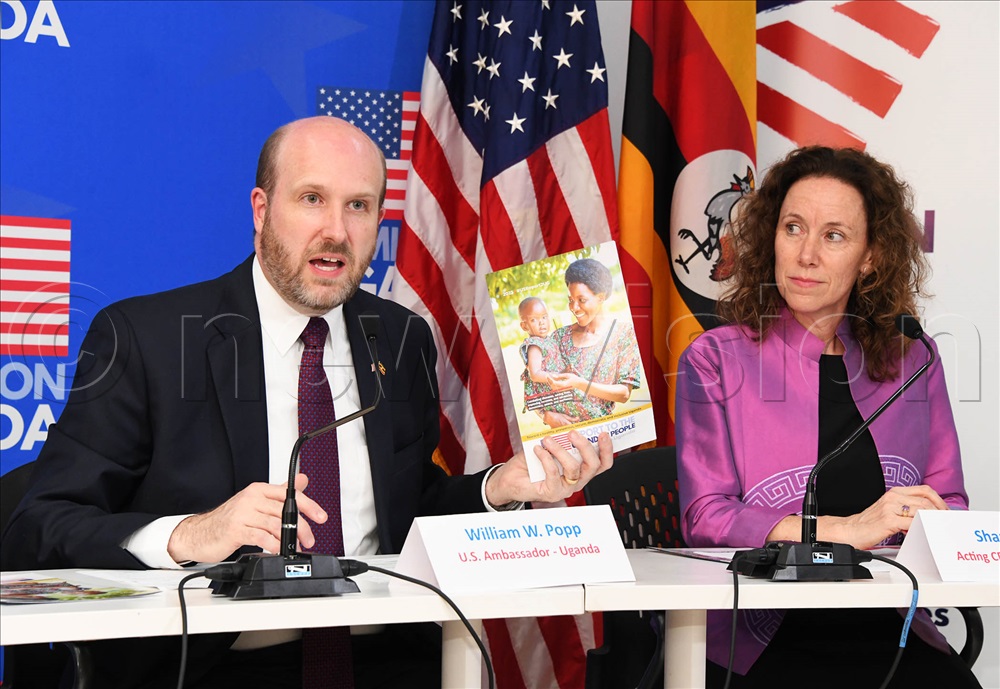
H.E William W. Popp, the U.S Ambassador to Uganda (left) with Sharon Daves Acting CDC Country Director during the launch of the seventh edition of the 'Report to the Ugandan People' A report which provides a review of U.S funded assistance programs in Uganda and their impacts. This is at the American Center in Kampala on Monday.
Uganda is one of the world's 30 high-burden countries for TB and TB/HIV co-infection.
Each year, approximately 91,000 people in Uganda get sick of TB with 32% of them being HIV-infected, according to the World Health Organization.
TB burden
To address the country's TB burden, the health ministry developed a robust TB and Leprosy Strategic Plan 2020/21-2024/25), that emphasizes patient care among other interventions.
This collaboration resulted in the US Centers for Disease Control (CDC) opening a multi-drug resistant TB (MDR-TB) treatment centre at the Uganda Prisons Service headquarters. The centre is the sole referral and management centre for incarcerated patients with MDR-TB in Uganda, according to the ministry.
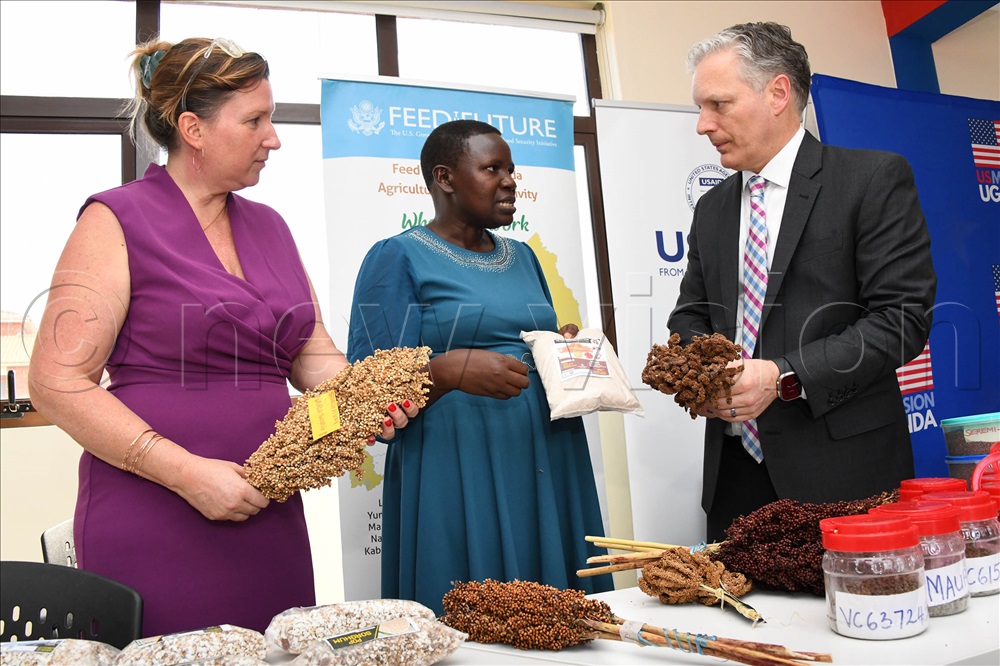
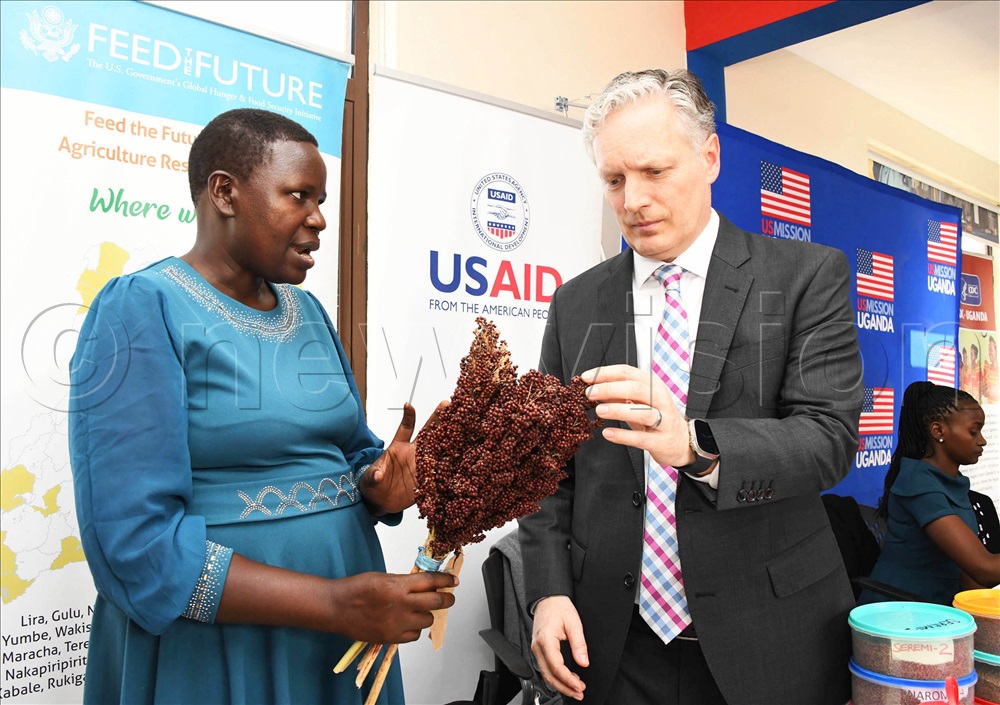
Scovia Adikini, a plant breeder and a team leader for dry land cereal research program at National Semi Arid Resources Research Institute one of the institutes under National Agriculture Research Organization in Uganda (centre) interacting with Richard Nelson USAID Uganda Mission Director after the launch of the seventh edition of the 'Report to the Ugandan People'. Adikini's research, focus on improving finger millet and sorghum productivity for food and nutritional security and income through breeding for varieties that are well adapted to biotic stress and with market quality traits. Looking on the left is Amy Beeler a Director at USAID Economic Growth office.
"Nearly 100,000 Ugandans were enrolled in TB preventive therapy in response to TB being a leading cause of death among people living," Popp said on Monday.
Aside from TB, the US also funded 104 national laboratories and helped over 10 regional referral hospitals, including Kiruddu, Mulago and Butabika switch to electronic medical records, boosting Uganda's health threats preparedness.
Lifesaving anti-retroviral therapy
It also supported nearly 1.4 million Ugandans receiving lifesaving anti-retroviral drugs (ARVS) through the US President's Emergency Plan for AIDS Relief (PEPFAR).
According to Popp, more than 95% of all HIV+ Ugandans and over 1.2 million have achieved viral suppression that prevents spreading the virus.
"To mitigate the HIV risk among adolescent girls and young women aged 10-24, nearly 175,000 girls and women received support to reduce HIV and expand their economic networks," the report says.
It also adds that with US funding, 2.5 million mosquito nets were distributed and 3.2 million residents in 770,000 houses were protected from malaria.
In addition, over 4,000 Ugandans trained for indoor residual spraying; and five million malaria-testing and treatment kits were provided to health facilities.




